
 EN
EN
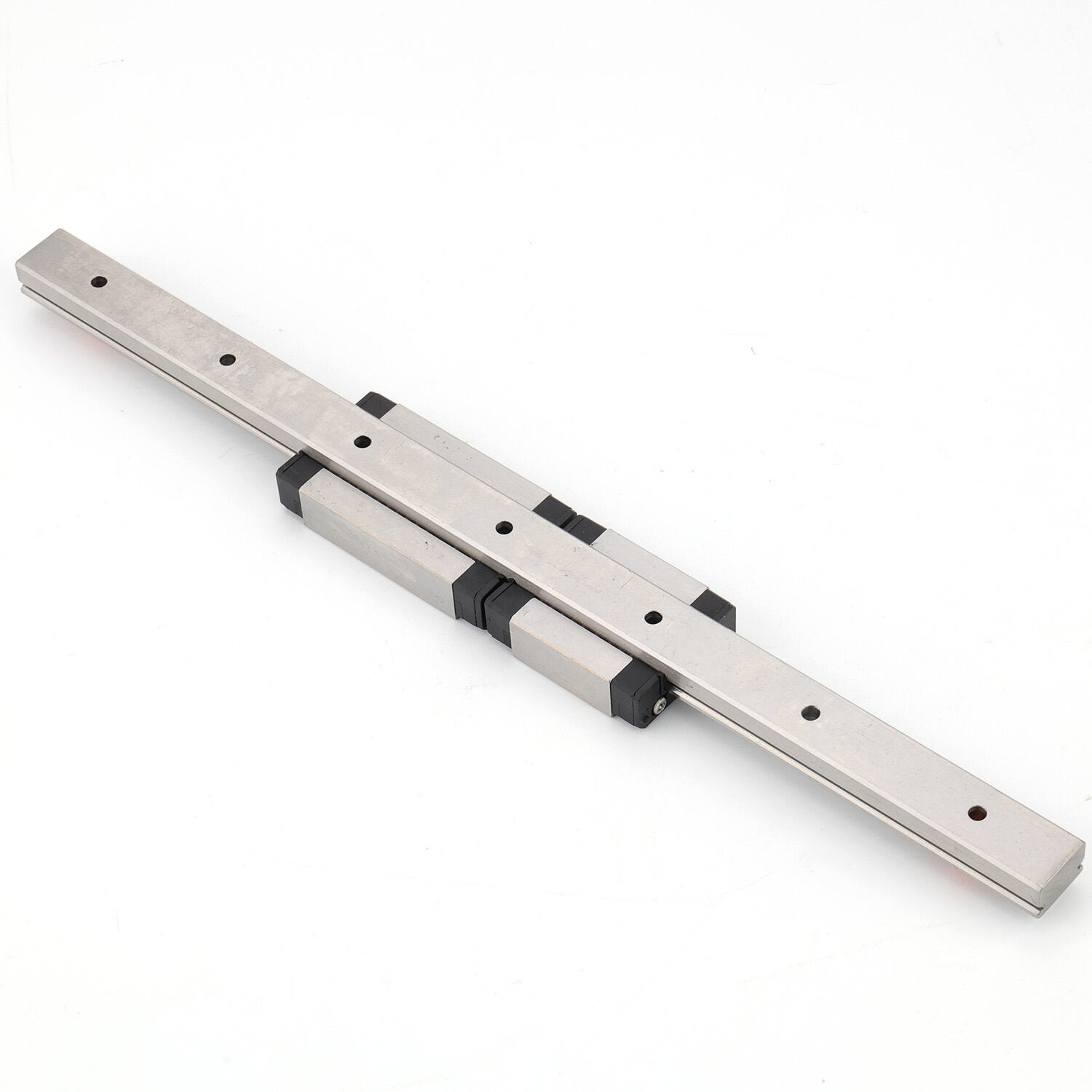
Machine precision stands as the cornerstone of modern manufacturing, determining product quality, operational efficiency, and competitive advantage across industries. In today's demanding production environments, achieving consistent accuracy requires mechanical systems that can deliver reliable motion control while minimizing unwanted deviations. The quest for enhanced precision has led engineers to increasingly rely on advanced linear motion components that provide the stability and accuracy essential for high-performance applications.
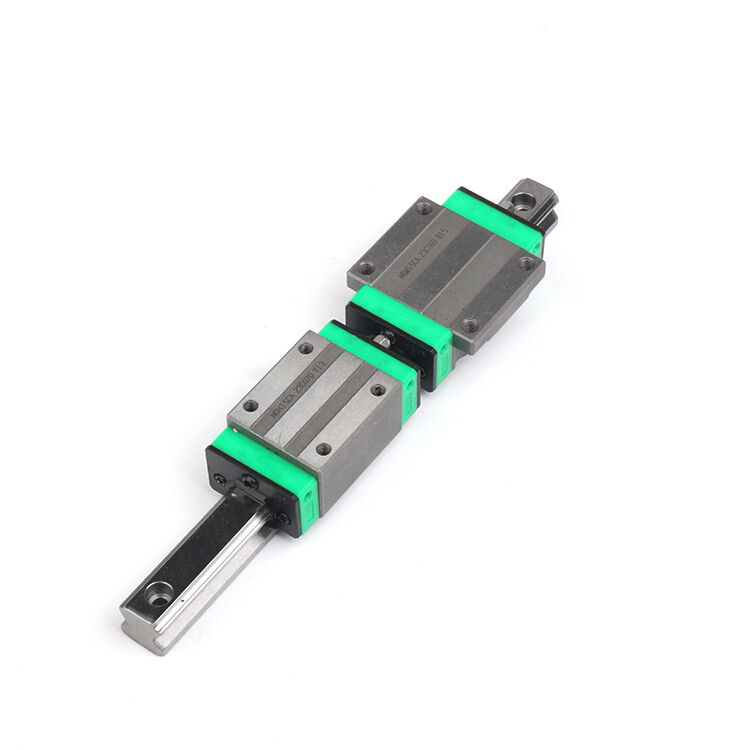
Linear guide rails fundamentally transform machine precision by providing controlled linear motion that eliminates common sources of mechanical error. These precision-engineered components create a stable platform for moving parts while maintaining strict positional accuracy throughout their operational range. By replacing traditional sliding mechanisms with advanced bearing systems, linear guide rails enable machines to achieve previously unattainable levels of accuracy and repeatability. Understanding how these systems enhance precision requires examining their mechanical principles, structural advantages, and practical applications in precision manufacturing environments.
Mechanical Foundation of Precision Enhancement
Load Distribution and Bearing Design
The precision improvement delivered by linear guide rails begins with their fundamental bearing design, which distributes loads across multiple contact points rather than relying on single-surface sliding interfaces. Traditional linear bearing systems often create uneven load distribution that leads to wear patterns and dimensional drift over time. Linear guide rails address this limitation through recirculating ball or roller bearing systems that maintain consistent contact geometry throughout the motion cycle.
This distributed load approach significantly reduces stress concentrations that typically cause deflection in conventional linear systems. By spreading operational forces across numerous bearing elements, linear guide rails maintain structural integrity under varying load conditions. The result is a motion system that preserves its dimensional accuracy even when subjected to changing operational demands, directly contributing to improved machine precision.
The bearing design also incorporates preload mechanisms that eliminate internal clearances responsible for positional uncertainty. This preload system ensures that moving components maintain precise relationships with their guides, preventing the micro-movements that accumulate into significant precision errors in conventional systems.
Constraint and Degree of Freedom Control
Linear guide rails enhance machine precision by providing precise constraint control over unwanted degrees of freedom while allowing smooth motion along the intended axis. Conventional linear bearing systems often permit small rotational movements and lateral displacements that compound into positioning errors. Linear guide rails eliminate these unwanted motions through their geometric design and bearing arrangement.
The rail and carriage geometry creates a kinematic constraint system that naturally resists pitch, yaw, and roll motions while maintaining smooth linear translation. This constraint control is essential for precision applications where even minor angular deviations can result in significant positioning errors at the tool point. The geometric stability provided by linear guide rails ensures that moving components follow precisely defined paths without deviation.
Modern linear guide rails incorporate asymmetric bearing arrangements that further enhance constraint control. These designs provide different resistance characteristics for various unwanted motions while optimizing the system for smooth linear movement. The result is a motion system that naturally maintains alignment and prevents the accumulation of positioning errors that typically degrade machine precision over time.
Dimensional Stability and Thermal Management
Material Selection and Thermal Expansion Control
The precision advantages of linear guide rails extend to their superior thermal stability compared to conventional linear bearing systems. These components typically utilize materials with carefully matched thermal expansion coefficients, ensuring that dimensional relationships remain stable across operating temperature ranges. This thermal stability is crucial for maintaining machine precision in industrial environments where temperature variations are inevitable.
High-quality linear guide rails incorporate heat treatment processes that create stable material structures resistant to dimensional changes under thermal cycling. The rail and carriage components undergo precision grinding operations that establish exact dimensional relationships maintained throughout the operational temperature range. This thermal stability directly translates to consistent machine precision regardless of environmental conditions.
The thermal management characteristics of linear guide rails also include their ability to conduct heat away from bearing interfaces more effectively than sliding systems. This heat dissipation capability prevents localized thermal expansion that could affect positioning accuracy. The improved thermal management helps maintain consistent clearances and preload conditions essential for precision performance.
Long-Term Dimensional Retention
Linear guide rails maintain machine precision over extended operational periods through their superior wear resistance and dimensional stability characteristics. Unlike conventional linear bearings that experience progressive wear leading to increased clearances and reduced accuracy, linear guide rails utilize hardened bearing surfaces and optimized contact geometries that minimize wear rates.
The recirculating bearing design ensures that contact surfaces experience uniform wear patterns rather than localized wear that creates dimensional irregularities. This uniform wear characteristic helps linear guide rails maintain their precision performance throughout their operational life. The bearing elements continuously redistribute contact points, preventing the formation of wear tracks that typically degrade precision in sliding systems.
Advanced lubrication systems integrated into modern linear guide rails further enhance their dimensional retention capabilities. These lubrication systems provide consistent film thickness and contamination protection that preserves bearing surface integrity. The result is a linear motion system that maintains its precision characteristics far longer than conventional alternatives, providing sustained machine accuracy over extended operational periods.
Dynamic Performance and Motion Quality
Friction Characteristics and Motion Smoothness
The precision improvements achieved through linear guide rails include their superior friction characteristics that enable smooth, predictable motion essential for accurate positioning. Conventional sliding systems often exhibit stick-slip behavior that creates positioning uncertainty and limits achievable precision. Linear guide rails eliminate this limitation through their rolling bearing interfaces that provide consistent friction characteristics throughout the motion range.
The rolling friction generated by linear guide rails remains relatively constant across different velocities and load conditions. This friction consistency enables precise motion control and accurate positioning, particularly important for applications requiring fine positioning resolution. The predictable friction behavior allows control systems to maintain better position accuracy and reduces the hunting behavior common in high-friction sliding systems.
Modern linear guide rails incorporate specialized bearing geometries and lubrication systems that further optimize their friction characteristics. These enhancements create motion systems with extremely low friction variation, enabling machines to achieve positioning accuracies that would be impossible with conventional linear bearing systems. The smooth motion quality directly translates to improved surface finishes and dimensional accuracy in machining applications.
Vibration Damping and Stability
Linear guide rails contribute to machine precision through their inherent vibration damping characteristics that reduce dynamic disturbances affecting positioning accuracy. The multiple bearing contact points and structural design of linear guide rails create natural damping that attenuates vibrations transmitted through the machine structure. This vibration control is essential for maintaining precision in high-speed operations and dynamic loading conditions.
The damping characteristics of linear guide rails help prevent resonant conditions that can amplify positioning errors in precision machines. The distributed bearing system creates multiple energy dissipation paths that effectively absorb vibrational energy before it can affect positioning accuracy. This vibration control capability enables machines to maintain precision performance even in challenging industrial environments with external disturbances.
Advanced linear guide rails incorporate specific design features that enhance their vibration damping properties. These may include modified bearing geometries, specialized materials, or integrated damping elements that further improve dynamic stability. The enhanced vibration control provided by these systems enables machines to achieve higher precision levels while operating at increased speeds and accelerations.
Integration Benefits and System-Level Precision
Modular Design and Assembly Accuracy
The precision advantages of linear guide rails extend to their modular design characteristics that facilitate accurate machine assembly and alignment. These components provide standardized mounting interfaces that enable precise positioning during machine construction. The modular approach reduces assembly errors that could compromise machine precision and simplifies the process of achieving accurate geometric relationships between machine components.
Linear guide rails typically incorporate precision ground mounting surfaces that serve as reference datums for machine assembly. These reference surfaces enable builders to establish accurate geometric relationships between different machine axes and components. The precision of these mounting interfaces directly contributes to overall machine accuracy by providing a stable foundation for all moving components.
The standardized design of linear guide rails also facilitates precision maintenance and replacement procedures. When components require service or replacement, the modular design ensures that new components maintain the same geometric relationships as the original installation. This maintainability preserves machine precision throughout its operational life and reduces the complexity of precision restoration procedures.
Multi-Axis Coordination and System Integration
Linear guide rails enhance machine precision through their ability to maintain accurate coordination between multiple motion axes. In complex machines requiring coordinated multi-axis movement, the precision of individual axes directly affects overall system accuracy. Linear guide rails provide the consistent motion quality necessary for maintaining precise relationships between coordinated axes throughout complex motion sequences.
The predictable motion characteristics of linear guide rails enable advanced control algorithms that can achieve higher precision through coordinated axis movement. The consistent friction and motion behavior provided by these systems allows controllers to implement sophisticated compensation strategies that further enhance positioning accuracy. This integration capability enables machines to achieve precision levels that exceed the capabilities of individual components.
Modern linear guide rails incorporate features that facilitate integration with advanced measurement and control systems. These integration capabilities enable real-time position feedback and active precision control that can compensate for environmental variations and wear effects. The combination of inherently precise mechanical design with advanced control systems creates machine tools capable of unprecedented accuracy levels.
FAQ
How much precision improvement can linear guide rails provide compared to conventional bearings?
Linear guide rails typically provide precision improvements of 5-10 times compared to conventional sliding bearings, with positioning accuracies often achieving sub-micron levels. The exact improvement depends on the specific application requirements, environmental conditions, and quality of the linear guide rail system. High-end linear guide rails can maintain positioning accuracies within 1-2 micrometers over their operational range, significantly exceeding the capabilities of traditional linear bearing systems.
What maintenance is required to preserve the precision benefits of linear guide rails?
Maintaining precision in linear guide rails requires regular lubrication according to manufacturer specifications, protection from contamination, and periodic inspection of bearing surfaces and mounting accuracy. Proper lubrication is essential for preserving smooth motion and preventing wear that could affect precision. Regular cleaning and contamination control help maintain bearing surface integrity, while periodic alignment checks ensure that mounting accuracy is preserved throughout the system's operational life.
Can linear guide rails improve precision in existing machines through retrofitting?
Linear guide rails can often be retrofitted to existing machines to improve precision, though the extent of improvement depends on the current machine design and structural rigidity. Successful retrofitting requires careful analysis of existing machine geometry, structural capabilities, and mounting provisions. While retrofitting can provide significant precision improvements, optimal results are typically achieved when linear guide rails are incorporated into the original machine design to fully utilize their precision capabilities.
How do environmental factors affect the precision performance of linear guide rails?
Environmental factors such as temperature variation, contamination, and vibration can affect linear guide rail precision, but these systems are generally more resistant to environmental influences than conventional bearings. Temperature stability is maintained through material selection and thermal expansion matching, while contamination protection is provided through integrated sealing systems. Proper installation and environmental control help linear guide rails maintain their precision advantages across a wide range of operating conditions.
Table of Contents
- Mechanical Foundation of Precision Enhancement
- Dimensional Stability and Thermal Management
- Dynamic Performance and Motion Quality
- Integration Benefits and System-Level Precision
-
FAQ
- How much precision improvement can linear guide rails provide compared to conventional bearings?
- What maintenance is required to preserve the precision benefits of linear guide rails?
- Can linear guide rails improve precision in existing machines through retrofitting?
- How do environmental factors affect the precision performance of linear guide rails?