
 EN
EN
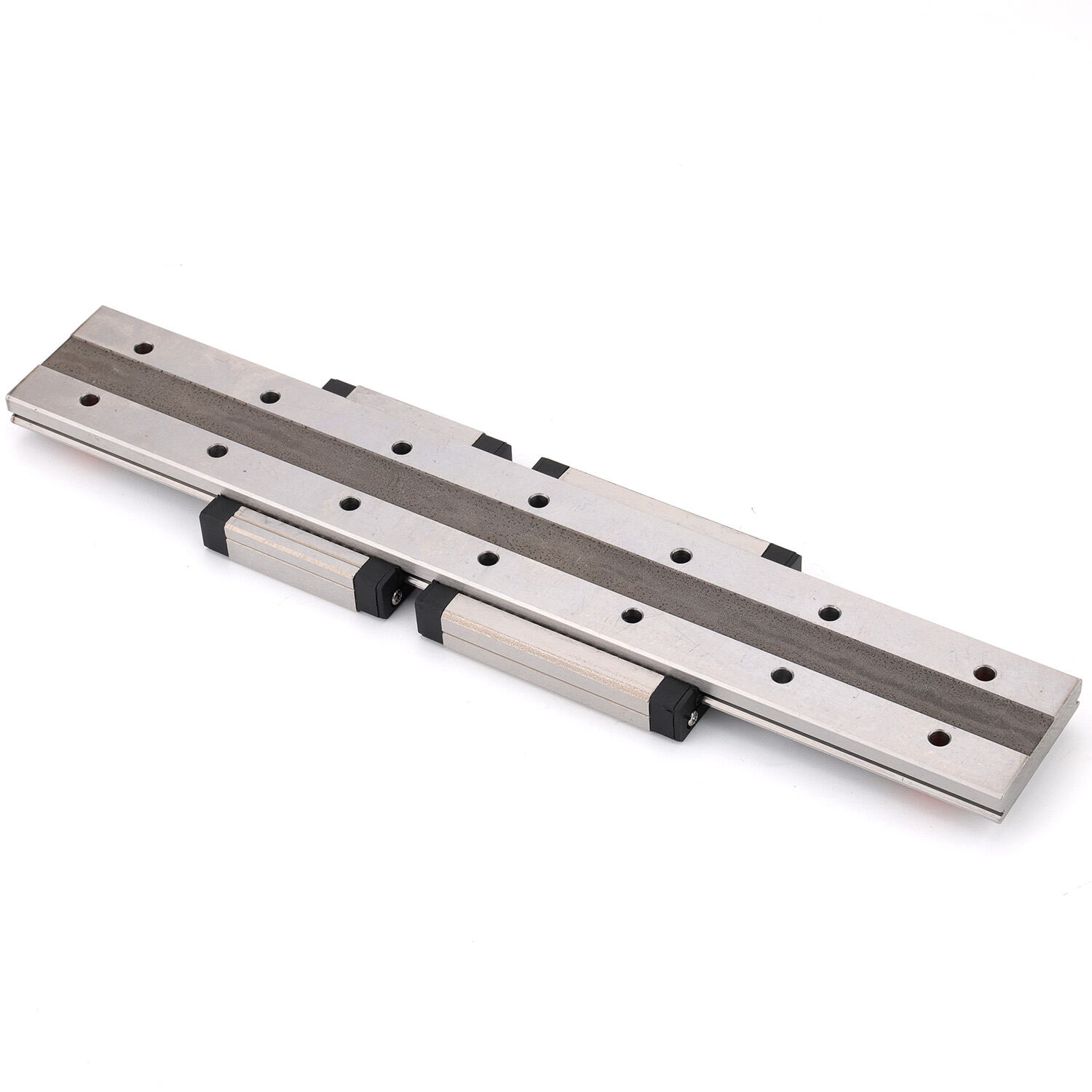
Selecting the right linear guide rails in 2026 requires a thorough understanding of modern industrial demands, evolving precision standards, and the specific operational requirements of your machinery. As manufacturing processes become increasingly automated and precision-critical, the choice of linear guide rails directly impacts system performance, longevity, and total cost of ownership. With advancements in materials science, load capacity engineering, and surface treatment technologies, today's linear guide rails offer unprecedented combinations of rigidity, smoothness, and durability that were unattainable just a few years ago.
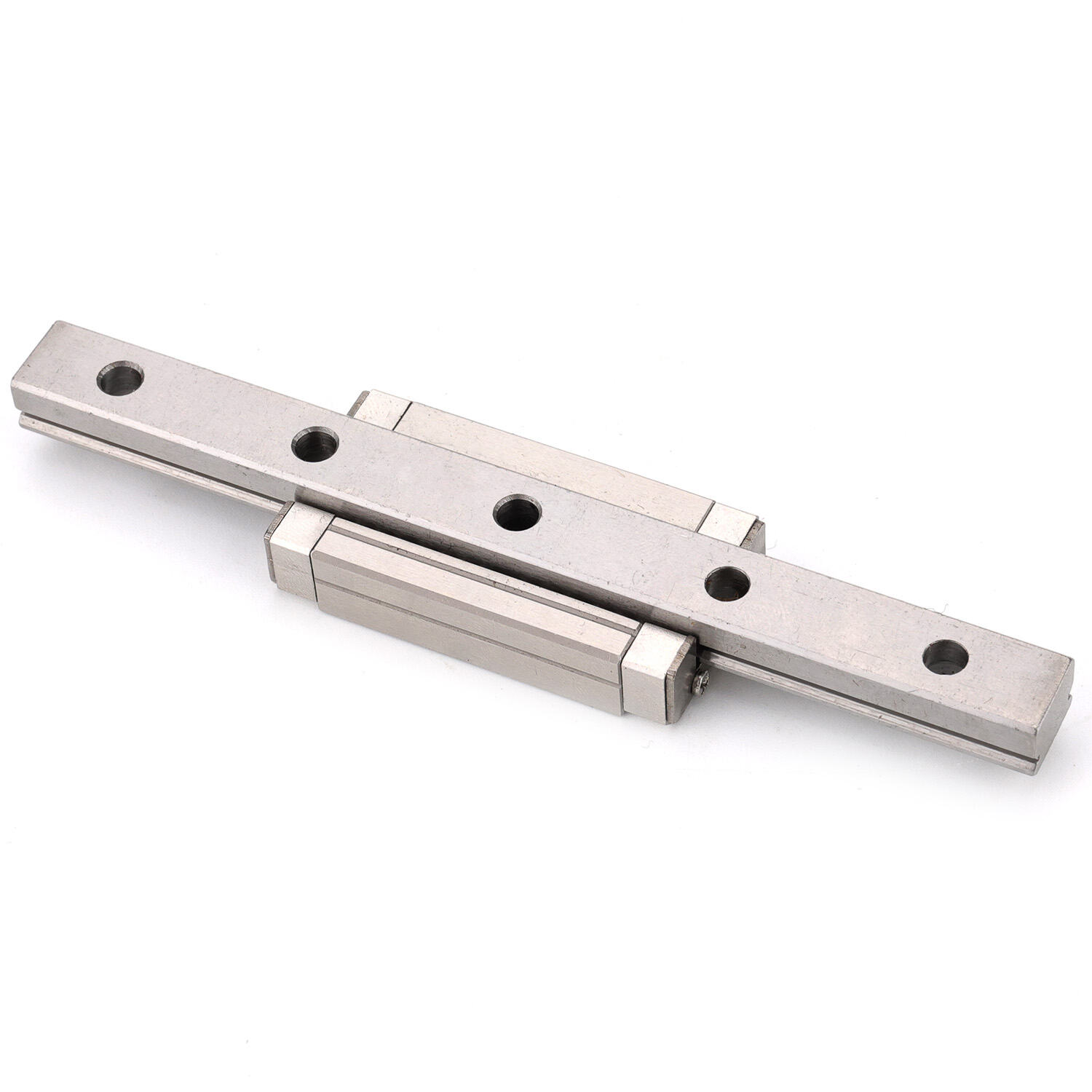
The selection process involves systematically evaluating load characteristics, travel distance, speed requirements, environmental conditions, and maintenance accessibility. In 2026, engineers must balance traditional performance metrics with emerging considerations such as energy efficiency, predictive maintenance compatibility, and integration with Industry 4.0 infrastructure. This comprehensive guide walks you through the essential decision criteria, helping you match linear guide rail specifications to your application's unique demands while anticipating future operational requirements and technological developments.
Understanding Load Capacity Requirements for Linear Guide Rails
Static and Dynamic Load Analysis
The foundation of selecting appropriate linear guide rails begins with accurate load capacity analysis. Static load capacity refers to the maximum load the guide rail can support when stationary, while dynamic load capacity indicates the permissible load during continuous motion. For 2026 applications, engineers must calculate both radial and moment loads, considering not just the weight of the carriage and payload but also acceleration forces, impact loads, and thermal expansion effects. Modern linear guide rails feature enhanced ball groove geometries that distribute loads more evenly across contact points, significantly improving capacity ratings compared to older designs.
Dynamic load calculations should account for the full operational cycle, including acceleration phases, constant velocity periods, and deceleration events. The rated life of linear guide rails typically follows L10 life calculations, where 90 percent of units will exceed the predicted travel distance before requiring maintenance. In precision manufacturing environments common in 2026, safety factors between 1.5 and 3.0 are standard, depending on criticality and accessibility for maintenance. Higher safety factors become essential when linear guide rails support medical equipment, semiconductor fabrication tools, or other applications where failure carries significant consequences.
Understanding Load Distribution Patterns
Load distribution across the linear guide rails significantly affects performance and longevity. Uneven load distribution causes premature wear on specific ball elements and raceway sections, reducing overall system life. When selecting linear guide rails for 2026 applications, evaluate whether loads are centered, offset, or variable throughout the travel range. Multi-rail configurations distribute loads across parallel guide systems, offering enhanced stability and capacity for heavy-duty applications. The preload level selected for your linear guide rails also impacts load distribution, with heavier preloads providing greater rigidity at the cost of slightly reduced efficiency.
Advanced finite element analysis tools available in 2026 enable precise modeling of load distribution under complex operational scenarios. These simulations reveal stress concentrations, deflection patterns, and optimal mounting configurations before physical installation. For applications with significant moment loads, such as cantilevered tooling or robotic arms, selecting linear guide rails with wider carriage spans and increased rigidity becomes critical. The mounting surface flatness and parallelism also directly influence load distribution, making installation quality as important as component selection.
Precision and Accuracy Specifications in Modern Manufacturing
Positional Accuracy and Repeatability Standards
Precision requirements have intensified across manufacturing sectors in 2026, with many applications demanding submicron accuracy levels. When selecting linear guide rails, distinguish between running parallelism, height tolerance, and width tolerance specifications. Running parallelism defines how consistently the carriage maintains its position relative to the rail mounting surface throughout travel, directly affecting final workpiece accuracy. Modern linear guide rails achieve running parallelism tolerances as tight as 3 micrometers over 300mm travel distances, essential for coordinate measuring machines, precision grinding equipment, and advanced assembly systems.
Repeatability represents the ability of linear guide rails to return to the same position consistently, a critical specification for automated manufacturing cells and robotic positioning systems. High-quality linear guide rails in 2026 deliver repeatability within 1 micrometer under stable thermal conditions. This performance level requires precisely manufactured ball elements, optimized ball circulation paths, and minimal clearance in the preload mechanism. Applications involving thermal cycling or variable ambient conditions require additional consideration of thermal stability specifications, as expansion coefficients affect the precision of linear guide rails throughout temperature ranges.
Rigidity and Deflection Characteristics
Rigidity specifications determine how linear guide rails respond to applied loads, directly influencing machining accuracy and surface finish quality. Static rigidity measures deflection under constant load, while dynamic rigidity relates to behavior under varying forces and vibration conditions. In 2026, high-performance linear guide rails incorporate optimized ball complement designs and four-point contact geometries that maximize rigidity without excessive preload. The rigidity of linear guide rails affects natural frequency characteristics, with higher rigidity systems better resisting vibration-induced positioning errors during high-speed operations.
Selecting linear guide rails with appropriate rigidity involves matching component specifications to machine structure characteristics. Overly rigid linear guide rails paired with insufficient machine bed rigidity create unbalanced systems where benefits cannot be fully realized. Conversely, insufficient guide rail rigidity limits achievable accuracy regardless of other system qualities. Modern selection tools available in 2026 enable rigidity matching analysis, ensuring linear guide rails integrate optimally with surrounding mechanical elements. Applications involving interrupted cuts, impact loads, or high-frequency positioning cycles particularly benefit from enhanced rigidity specifications.
Speed Capabilities and Acceleration Performance
Maximum Velocity Considerations
Speed capabilities of linear guide rails have expanded significantly by 2026, with premium systems achieving continuous velocities exceeding 5 meters per second. Maximum velocity ratings depend on multiple factors including ball circulation efficiency, lubrication method, heat dissipation characteristics, and dynamic stability. When selecting linear guide rails for high-speed applications, consider the dn value, calculated by multiplying ball diameter by rotational speed, which indicates lubrication regime and thermal limits. Advanced ball circulation designs in modern linear guide rails minimize turbulence and friction, enabling higher speed operation without excessive heat generation.
High-speed operation of linear guide rails requires careful attention to dynamic balance, mounting accuracy, and environmental vibration isolation. At velocities above 3 meters per second, even minor rail straightness deviations or mounting surface irregularities generate significant dynamic forces that accelerate wear and compromise accuracy. The retainer design within linear guide rails becomes critical at high speeds, with cage-guided systems offering superior stability compared to conventional circulation mechanisms. Lubrication selection also impacts speed capabilities, with grease-lubricated linear guide rails typically limited to lower velocities than oil-lubricated systems due to churning resistance.
Acceleration and Deceleration Requirements
Beyond maximum velocity, acceleration characteristics determine cycle time performance and productivity in automated systems. When selecting linear guide rails for 2026 applications, evaluate the acceleration forces generated during rapid positioning moves and ensure components can withstand resulting inertial loads without degradation. High-acceleration applications, common in pick-and-place systems and semiconductor manufacturing equipment, impose significant dynamic loads that exceed static weight considerations. The mass of the carriage assembly affects achievable acceleration rates, making lightweight aluminum carriages advantageous for ultra-responsive systems.
Repeated acceleration cycles subject linear guide rails to fatigue loading patterns that differ from steady-state operation. Ball elements experience cyclic stress variations that can lead to surface fatigue if specification limits are exceeded. Modern linear guide rails designed for 2026 applications incorporate surface hardening treatments and optimized ball geometries that enhance fatigue resistance. When acceleration performance is critical, select linear guide rails with higher dynamic load ratings than steady-state calculations alone would suggest, providing safety margin against cyclic loading effects. Integration with servo drive systems requires matching motor characteristics to linear guide rail friction and mass properties for optimal control response.
Environmental Factors and Operating Conditions
Contamination and Sealing Protection
Operating environment significantly influences linear guide rail selection, with contamination representing a primary failure mode in many applications. Dust, chips, coolant spray, and chemical exposure all threaten precision and longevity. In 2026, linear guide rails offer various sealing configurations ranging from basic wipers to comprehensive multi-stage labyrinth seals with integrated scraper elements. When selecting linear guide rails for harsh environments, prioritize seal effectiveness while recognizing that more comprehensive sealing slightly increases friction and reduces maximum speed capabilities.
Machine tool applications involving cutting fluids and metal chips require linear guide rails with robust end seals and bottom seals that prevent contamination from entering ball circulation paths. Conversely, clean room applications for electronics manufacturing or pharmaceutical production may specify stainless steel linear guide rails with minimal outgassing characteristics and cleanroom-compatible lubricants. The seal material selection matters significantly in chemical processing environments, where standard nitrile seals may degrade while fluoroelastomer options provide extended service life. Some 2026 linear guide rails incorporate self-cleaning mechanisms where ball circulation actively expels contaminants rather than allowing accumulation.
Temperature Range and Thermal Stability
Operating temperature affects linear guide rail performance through multiple mechanisms including dimensional changes, lubricant viscosity variations, and material property alterations. Standard linear guide rails typically operate across -20°C to +80°C ranges, while specialized variants extend to -40°C or +150°C for extreme applications. When selecting linear guide rails for 2026 installations, consider not just ambient temperature but also heat generated by nearby processes, friction-induced temperature rise, and thermal cycling patterns. Thermal expansion coefficients between rail and mounting structure materials must be compatible to prevent preload variations or binding conditions.
High-temperature applications common in glass processing, foundries, and heat treatment equipment require linear guide rails with special lubricants, seal materials, and sometimes active cooling provisions. Low-temperature applications including cryogenic systems and cold storage automation demand lubricants that maintain fluidity and linear guide rails manufactured from materials that retain toughness without becoming brittle. Thermal stability specifications indicate how linear guide rail accuracy changes across temperature ranges, with precision-critical applications requiring temperature-compensated designs or environmental temperature control. Some advanced linear guide rails in 2026 incorporate internal temperature sensors enabling predictive thermal compensation algorithms.
Maintenance Accessibility and Lifecycle Considerations
Lubrication Methods and Service Intervals
Maintenance requirements significantly impact total cost of ownership, making lubrication system selection a critical decision when choosing linear guide rails for 2026 applications. Grease lubrication offers simplicity and cleanliness, suitable for applications with moderate speeds and accessible maintenance intervals. Oil lubrication, delivered through drip feed or circulation systems, enables higher speeds and longer service life but requires more complex infrastructure. Automatic lubrication systems available in 2026 integrate with machine control systems, delivering precisely metered lubricant quantities based on operational hours or travel distance, minimizing manual intervention.
Service interval specifications for linear guide rails depend on operating conditions, speed, load, and environmental factors. In clean, moderate-duty applications, quality linear guide rails may operate 500 to 1000 hours between relubrication, while harsh environments or high-speed operation reduce intervals to 100 to 200 hours. Long maintenance intervals become particularly valuable in applications where accessibility is limited, such as overhead gantry systems or equipment within sealed enclosures. Some premium linear guide rails incorporate sealed-for-life lubrication systems where entire carriages are replaced rather than relubricated, simplifying maintenance planning but increasing component costs.
Replacement Planning and Spare Parts Strategy
Service life predictions for linear guide rails enable proactive replacement planning that prevents unexpected failures and production disruptions. Life expectancy calculations based on load, speed, and duty cycle provide travel distance estimates typically expressed in kilometers. When selecting linear guide rails for critical applications in 2026, consider not just initial performance but also long-term availability of replacement components and manufacturer support commitments. Standardized mounting dimensions enable interchangeability between manufacturers for some linear guide rail series, providing supply chain flexibility and competitive pricing advantages.
Establishing an appropriate spare parts inventory balances carrying costs against downtime risks. For machines using multiple identical linear guide rails, stocking complete carriage assemblies enables rapid replacement without precision alignment requirements. Rail sections typically require more involved replacement procedures including mounting surface preparation and parallelism verification. Monitoring systems available in 2026 enable condition-based replacement strategies where linear guide rail health is continuously assessed through vibration analysis, temperature monitoring, and positioning accuracy tracking. Predictive maintenance approaches optimize replacement timing, maximizing component utilization while maintaining reliability.
FAQ
What is the typical lifespan of linear guide rails in industrial applications?
The lifespan of linear guide rails varies considerably based on load conditions, operating speed, environmental factors, and maintenance quality. Under nominal load conditions with proper lubrication, quality linear guide rails typically achieve 20,000 to 50,000 kilometers of travel before requiring replacement. High-load applications or contaminated environments may reduce this to 5,000 to 10,000 kilometers, while light-duty clean applications can exceed 100,000 kilometers. Modern life prediction software considers your specific operating parameters to provide accurate estimates, enabling proactive maintenance planning and spare parts management for 2026 installations.
How does preload selection affect linear guide rail performance?
Preload significantly influences linear guide rail characteristics by eliminating internal clearance and establishing controlled contact between balls and raceways. Light preload provides smooth operation with minimal friction, suitable for high-speed applications where rigidity is less critical. Medium preload offers balanced performance for general industrial applications, providing good rigidity while maintaining reasonable friction levels. Heavy preload maximizes rigidity and precision, essential for machining operations and applications with significant moment loads, though at the cost of increased friction and slightly reduced speed capability. Selecting appropriate preload in 2026 requires matching application demands with performance trade-offs.
Can linear guide rails operate in vacuum environments?
Yes, specially designed linear guide rails can operate in vacuum environments common in semiconductor manufacturing, space simulation chambers, and scientific instruments. Vacuum-compatible linear guide rails use solid lubricants such as molybdenum disulfide or specially formulated low-outgassing oils that do not evaporate under vacuum conditions. Seal materials must also be vacuum-compatible, avoiding standard elastomers that outgas. Performance characteristics in vacuum differ from atmospheric operation due to altered friction behavior and heat dissipation characteristics. When selecting linear guide rails for vacuum applications in 2026, specify vacuum compatibility requirements explicitly and consider systems specifically engineered for these demanding conditions rather than adapting standard components.
What mounting surface preparation is required for linear guide rails?
Mounting surface quality directly affects linear guide rail performance, requiring careful preparation to achieve specified accuracy and longevity. Surface flatness should typically not exceed 0.02mm per 300mm length, with parallelism between rail mounting surfaces maintained within 0.03mm for precision applications. Surface finish specifications generally call for Ra values below 1.6 micrometers to ensure proper seating and load distribution. Threaded mounting holes must be perpendicular to the mounting surface within specified tolerances to prevent installation stress. In 2026, many installations use precision grinding or scraping of mounting surfaces, followed by CMM verification before linear guide rail installation. Proper surface preparation prevents premature wear, maintains accuracy throughout the service life, and ensures published performance specifications are achieved in actual operation.