
 EN
EN
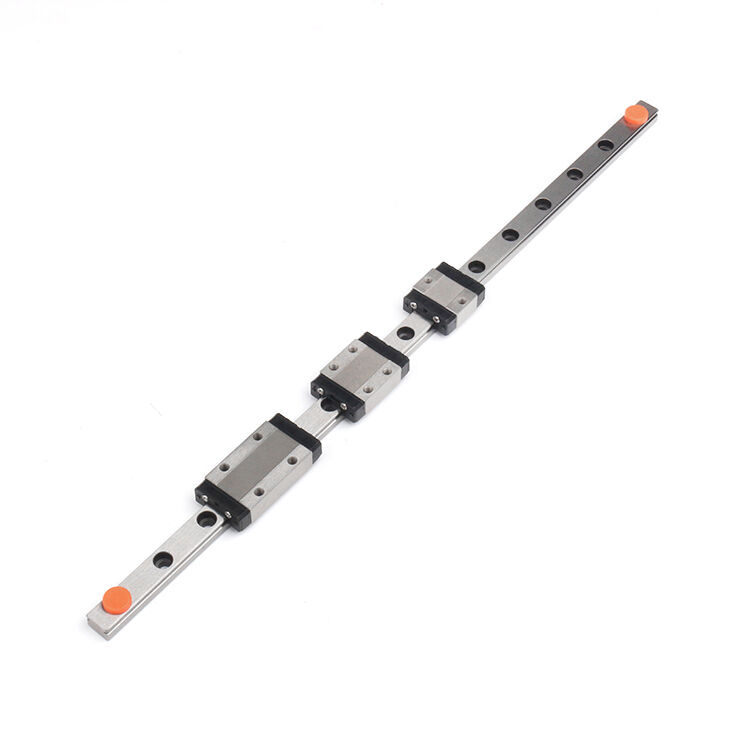
Selecting the correct dimensions for linear guide rails is one of the most pivotal decisions in mechanical design. Whether you are building a high-precision CNC machine, an automated packaging line, or a heavy-duty industrial robot, the size of your rails dictates the system's longevity, accuracy, and safety. Choosing a rail that is too small leads to premature wear and potential structural failure, while over-specifying results in unnecessary costs and increased system inertia.
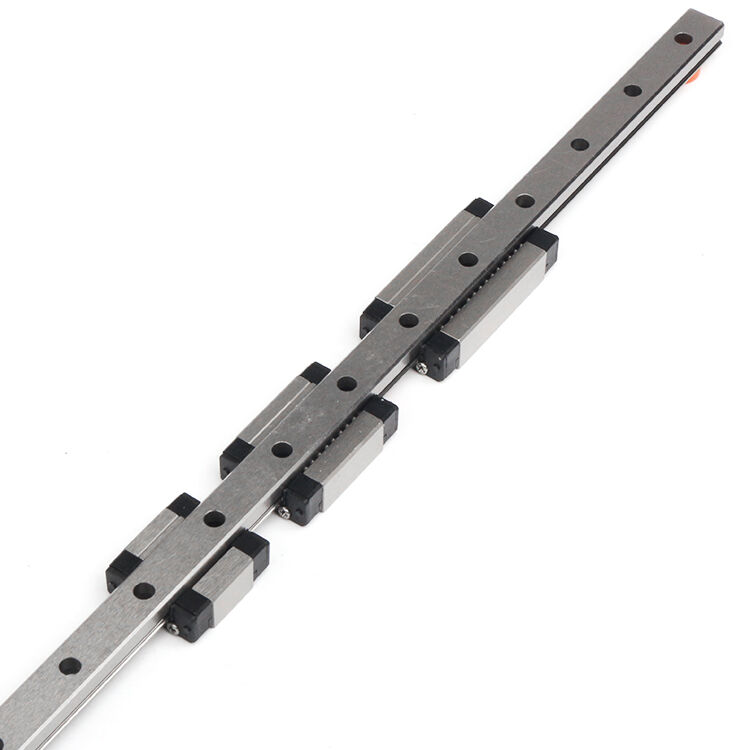
To determine the ideal size, engineers must evaluate the relationship between static loads, dynamic moments, and the physical constraints of the machine frame. Linear guide rails are not a "one size fits all" component; they are precision-engineered interfaces that must bridge the gap between theoretical motion and physical reality.
Understanding Load Capacities and Static Safety Factors
The primary factor in sizing linear guide rails is the load-bearing requirement. Manufacturers categorize these loads into two main types: static load rating (C0) and dynamic load rating (C). The static load rating represents the maximum load the rail can withstand without permanent deformation of the raceways or rolling elements.
In most industrial applications, you must apply a safety factor to these ratings. For example, a machine subject to frequent vibrations or impact loads requires a much higher safety factor (often between 3.0 and 5.0) than a laboratory instrument operating under smooth, controlled conditions. When the carriage of the linear guide is subjected to overhanging loads, the resulting moment—often referred to as pitch, roll, or yaw—must be calculated. If the moment exceeds the rail's rated capacity, you may need to increase the rail size or use multiple carriages on a single rail to distribute the force.
Dimensional Standards and Interchangeability
Most linear guide rails follow international standards, such as those established by ISO or DIN, which simplifies the replacement and integration process. The "size" of a rail typically refers to its width at the base, measured in millimeters. Common sizes range from miniature 5mm rails for medical devices to massive 65mm or 100mm rails for heavy-duty gantry systems.
The following table provides a general guideline for common rail sizes and their typical application environments based on load intensity.
| Rail Size (mm) | Load Profile | Typical Application Scenarios |
| 7 - 15 | Miniature / Light | 3D printers, lab automation, semiconductor handling |
| 20 - 30 | Medium / Standard | CNC milling machines, laser cutters, woodworking equipment |
| 35 - 55 | Heavy Industrial | Automotive assembly lines, large-scale injection molding |
| 65+ | Extra Heavy | Shipyard cranes, heavy structural steel fabrication |
The Role of Rail Length and Precision Classes
Beyond the width, the length of the linear guide rails is a critical sizing component. The total length is determined by the required stroke distance plus the length of the carriage (or carriages) and any necessary safety buffers at the ends. It is important to note that as the length of a rail increases, the difficulty of maintaining high parallelism also increases.
Manufacturers offer different precision classes—ranging from "Normal" to "Ultra-Precision"—which dictate the allowable running parallelism and height tolerances. If your application involves high-speed travel over long distances, sizing the rail correctly also involves checking the "critical speed" to avoid resonance. A longer, thinner rail may whip or vibrate if the carriage travels too fast, necessitating a move to a wider rail profile simply for the sake of increased stiffness rather than load capacity alone.
Environmental and Material Considerations in Sizing
The environment in which the linear guide rails operate can influence the necessary size and material choice. In corrosive environments, such as food processing or chemical plants, stainless steel rails or specialized coatings are required. These materials often have slightly lower load ratings than standard carbon steel, which may require you to "size up" to achieve the same service life.
Furthermore, lubrication access is a sizing factor that is often overlooked. Larger carriages have more internal space for robust sealing systems and grease nipples. If your machine operates in a high-dust environment, choosing a rail size that accommodates heavy-duty scrapers and bellows is essential for maintaining the integrity of the motion system over time.
Frequently Asked Questions (FAQ)
How do I calculate the life expectancy of a specific rail size?
The life of a linear guide is calculated using the formula L = (C/P)^3 * 50km, where L is the nominal life, C is the basic dynamic load rating, and P is the applied load. If the calculated life is shorter than your machine’s required service interval, you should select a larger rail size with a higher C value.
Can I use two small rails instead of one large rail?
Yes, using two parallel rails is a common way to handle high moment loads (like a wide table). This distribution of force often allows for smaller individual rails while providing much higher system rigidity and stability compared to a single-rail setup.
What is the difference between "N" and "H" precision grades when sizing?
"N" stands for Normal and "H" for High precision. While the physical dimensions of the rail (width and height) remain the same, the H-grade has much tighter tolerances for height variation between different carriages on the same rail. This is crucial if you are mounting a flat plate across multiple carriages.
Does the mounting orientation affect what size rail I need?
Absolutely. If the rails are mounted vertically, the "reverse-radial" load and the weight of the carriage/payload act differently than in a horizontal setup. In vertical orientations, the braking and holding forces often dictate a larger rail size to ensure the drive system and the rail can handle the gravitational pull during a power failure.
Strategic Selection for Long-Term Reliability
Choosing the right linear guide rails requires a balance of mathematical precision and practical foresight. By analyzing the static safety factors, the dynamic load cycles, and the environmental constraints, you can select a rail size that ensures smooth, repeatable motion for years. Remember that the goal is not just to find a rail that "fits," but to find one that thrives under the specific stresses of your industrial application. Always consult the manufacturer's load-moment charts before finalizing your design to ensure the chosen dimensions align with the projected duty cycle of your machinery.