
 EN
EN
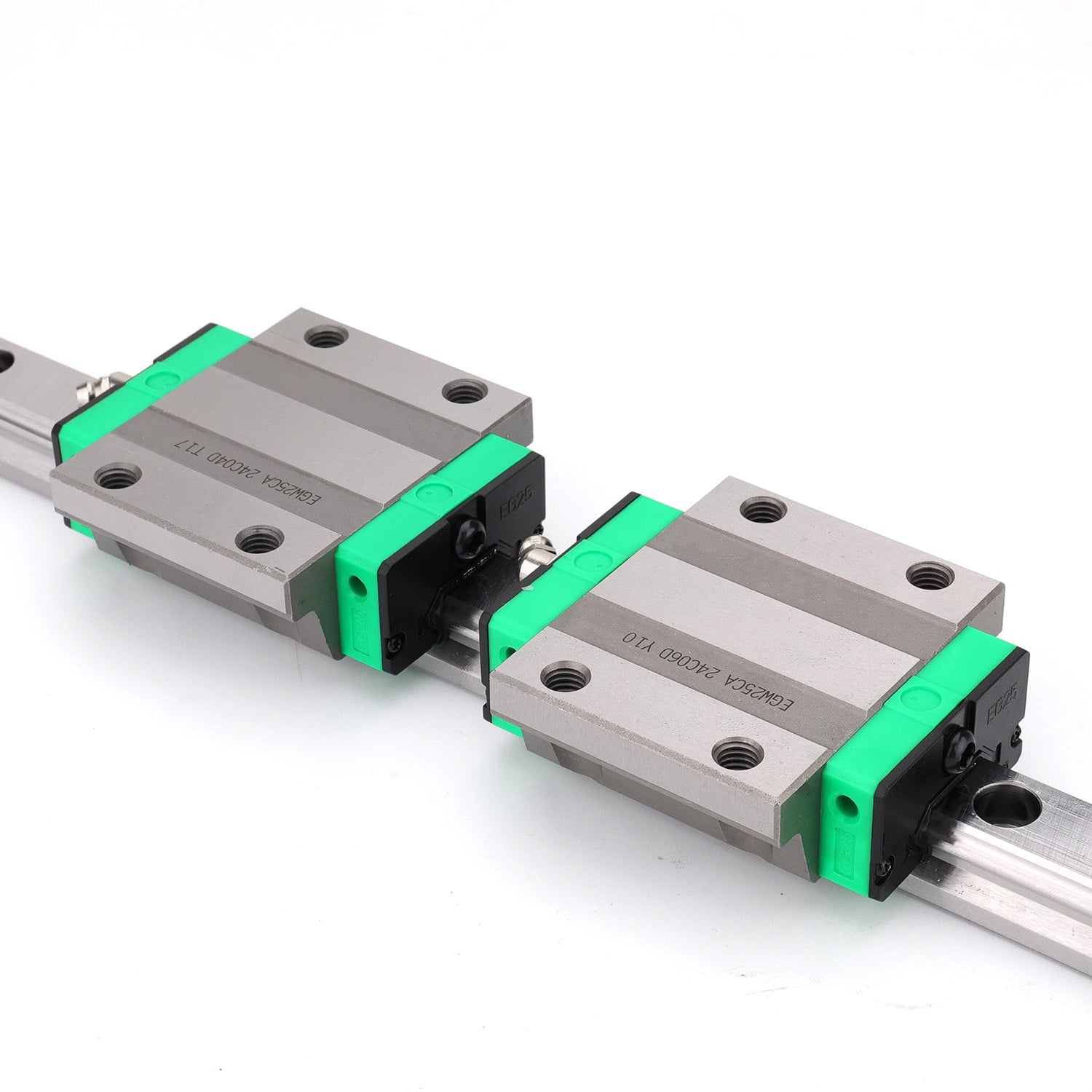
In modern industrial machinery, sliding rails serve as the foundational elements that enable controlled, repeatable linear motion. Whether in CNC machining centers, automated assembly lines, or precision inspection equipment, sliding rails define how machine components travel from one position to another with accuracy and reliability. Understanding how sliding rails work is essential for engineers, procurement specialists, and system integrators who depend on consistent motion performance in demanding industrial environments.
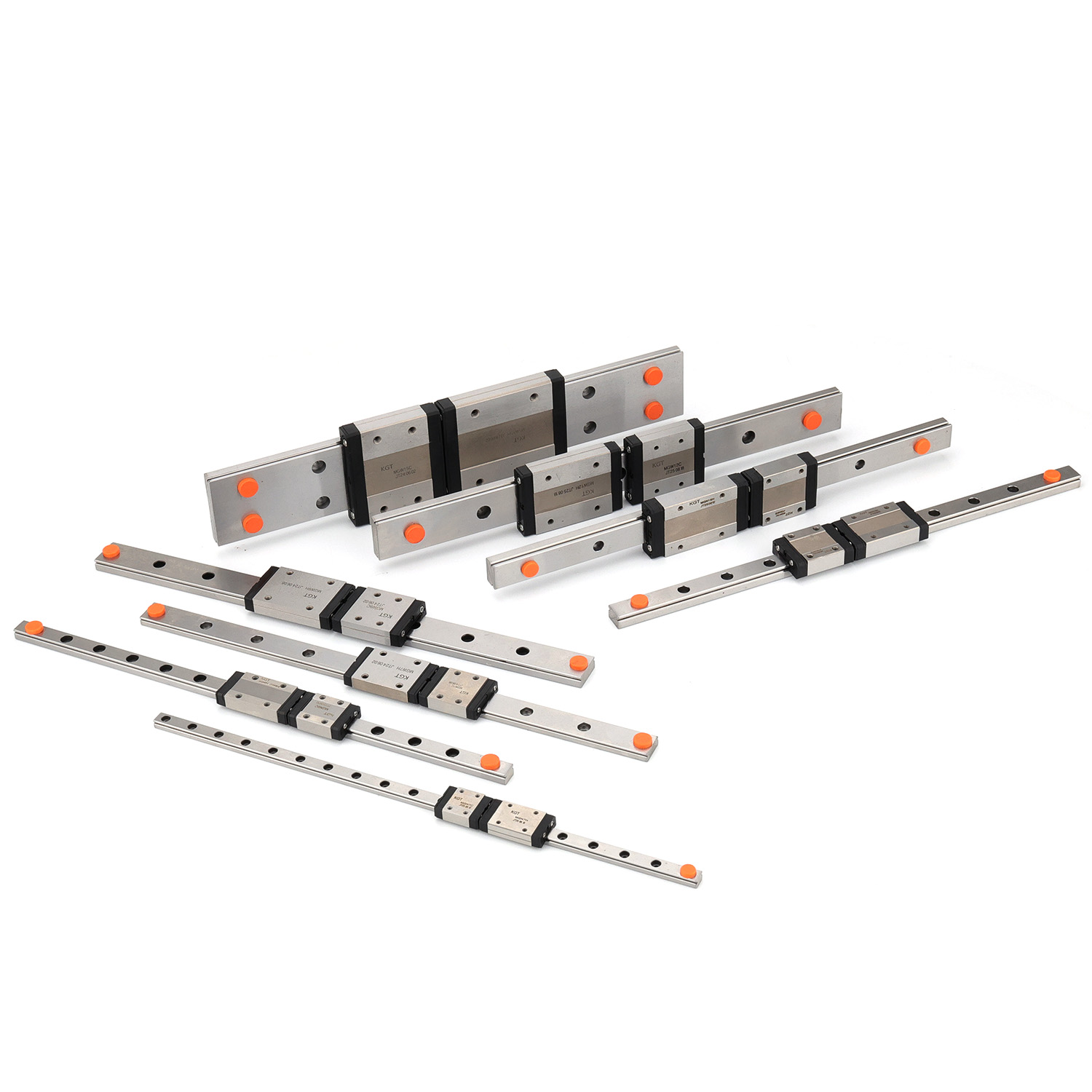
Sliding rails are mechanical components designed to guide moving parts along a fixed linear path. They consist of a rail profile and a carriage block that rides along the rail using rolling or sliding contact elements. The precise interaction between the rail and the carriage determines how well the system handles load, speed, vibration, and positional accuracy over time. Industrial systems rely on sliding rails not just for movement, but for maintaining the exact geometric relationship between machine components during operation.
The Core Mechanism Behind Sliding Rails
Rail and Carriage Interaction
Sliding rails operate on the principle of constrained linear guidance. The rail is a precisely ground steel profile with grooves or raceways along its length. The carriage, also known as a slider block, sits over the rail and contains internal rolling elements — typically steel balls or rollers — that circulate continuously as the carriage moves. This recirculating element design is what allows sliding rails to achieve both low friction and high load capacity simultaneously.
As the carriage travels along the rail, the rolling elements carry the applied load between the carriage and the rail surface. The contact geometry is engineered to distribute force across multiple contact points, which reduces stress concentration and extends service life. Sliding rails with Gothic arch or circular arc groove profiles are common in industrial settings because these designs provide four-point contact, giving the rail excellent rigidity in multiple directions at once.
Recirculation and Motion Continuity
The recirculating ball or roller system inside the carriage is critical to how sliding rails maintain smooth travel over long distances. As rolling elements exit the load zone at one end of the carriage, they return through a return channel and re-enter the load zone at the opposite end. This continuous loop ensures that sliding rails never run out of rolling elements under the load-bearing contact area, no matter how far the carriage travels.
Sliding rails designed with roller elements instead of ball elements offer higher rigidity and better performance under heavy or impact loads. Ball-type sliding rails are preferred when high speed and low noise are priorities. The choice between these internal element types directly affects how the sliding rails behave under specific industrial conditions, and system designers must match the element type to the application requirements.
Load Capacity and Directional Rigidity
Multi-Directional Load Handling
One of the defining capabilities of industrial sliding rails is their ability to handle loads in multiple directions simultaneously. Unlike simple bushing guides or dovetail ways, precision sliding rails are engineered to resist radial loads, reverse radial loads, and lateral forces within a single compact profile. This multi-directional rigidity makes sliding rails suitable for applications where the moving component experiences complex or shifting force vectors during operation.
Sliding rails are rated with dynamic load capacity and static load capacity values. Dynamic load capacity describes how much force the sliding rails can sustain during continuous motion without premature fatigue failure. Static load capacity defines the maximum force the sliding rails can bear without permanent deformation when stationary. These ratings are critical for selecting the correct sliding rails for a given machine design, and using undersized sliding rails in a high-load application will cause rapid degradation of the rail surface and rolling elements.
Preload and System Stiffness
Preload is a deliberate internal interference applied within sliding rails to eliminate internal clearance between the rolling elements and the rail raceways. By removing play, preload increases the stiffness of the sliding rails and reduces micro-displacement under applied forces. Sliding rails are available in several preload classes, ranging from zero preload for light applications to heavy preload for systems requiring maximum rigidity.
In precision machining, the stiffness provided by preloaded sliding rails directly determines the surface finish quality of machined parts. In robotic systems, preloaded sliding rails ensure that the end effector reaches its programmed position without positional drift caused by internal play. Selecting the correct preload level is therefore not just a mechanical decision but a functional one that shapes overall system accuracy.
Installation, Alignment, and Maintenance of Sliding Rails
Mounting Precision and Alignment
Sliding rails must be mounted on accurately machined reference surfaces to perform correctly. The rail is typically fastened to a datum surface using precision-ground mounting holes or shoulder references. If the mounting surface has flatness or straightness errors that exceed the self-correction capability of the sliding rails, those errors will transfer directly into the motion path. Proper surface preparation before installing sliding rails is therefore a necessary step, not an optional one.
When two parallel sliding rails are used on the same machine axis, the alignment between them is equally important. Misalignment introduces side loading and binding forces on the carriages, which increases friction, generates heat, and accelerates wear on the sliding rails. Industrial assembly procedures for parallel sliding rail systems typically include careful rail-to-rail parallelism measurement using precision alignment tools before final fastener torquing.
Lubrication and Long-Term Performance
Sliding rails require consistent lubrication to maintain low friction, protect against corrosion, and extend service intervals. Most sliding rails are compatible with both grease and oil lubrication, with grease being preferred in environments where contamination control is important. Many carriage designs for sliding rails include integrated lubrication ports or grease nipples that allow re-lubrication without disassembly.
In environments with metal chips, dust, or coolant exposure, sliding rails rely on end seals and side wipers attached to the carriage to prevent contamination from entering the raceway contact zone. Proper sealing combined with scheduled re-lubrication is the foundation of a reliable maintenance strategy for sliding rails in harsh industrial conditions. Neglecting lubrication is the most common cause of early sliding rail failure in production environments.
FAQ
What is the difference between sliding rails and plain linear guides?
Sliding rails use recirculating rolling elements such as balls or rollers between the carriage and rail, which results in low friction and high precision. Plain linear guides rely on direct surface-to-surface sliding contact, which generates higher friction and is better suited to slow-speed or low-precision applications. Industrial systems that require accuracy and speed almost always use rolling-element sliding rails rather than plain sliding guides.
How do I know if my sliding rails need replacement?
Common signs that sliding rails need replacement include increased running noise, visible pitting or flaking on the rail surface, excessive play in the carriage, and loss of positional accuracy in the machine. Periodic inspection of sliding rails for surface damage and measurement of carriage play against manufacturer tolerances are the standard methods for determining replacement intervals in industrial maintenance programs.
Can sliding rails be used in vertical orientations?
Yes, sliding rails are fully suitable for vertical and inverted orientations. In vertical installations, sliding rails must be properly preloaded to prevent the carriage from sliding freely under gravity when the drive system is disengaged. Lubrication selection also becomes important in vertical sliding rail applications, because grease retention on the raceway must be maintained against gravitational drainage over time.