I. Core Positioning and Nomenclature
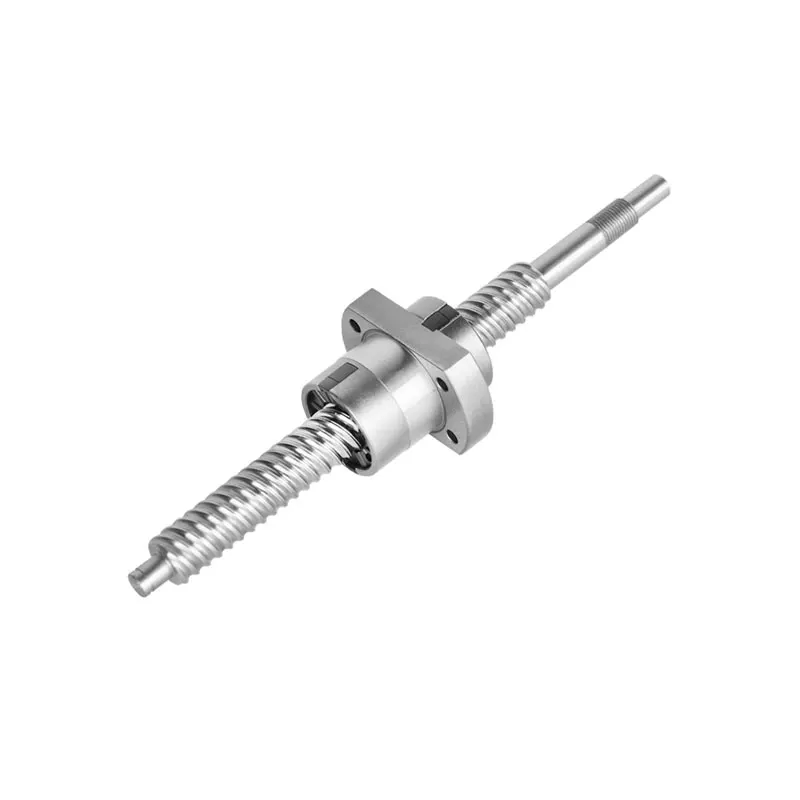
Positioning: An economical, compact-installation, standard-precision ball screw support unit assembly. It achieves an excellent balance between cost, performance, and installation convenience, making it a widespread and practical choice in automation equipment.
Nomenclature Interpretation:
- S: Likely stands for "Support Unit" or "Standard."
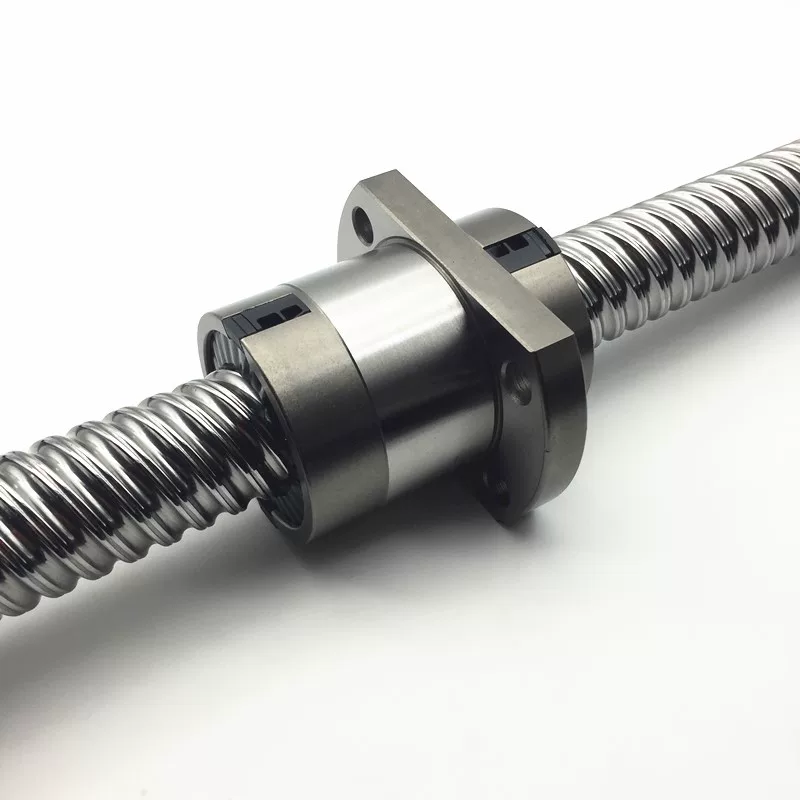
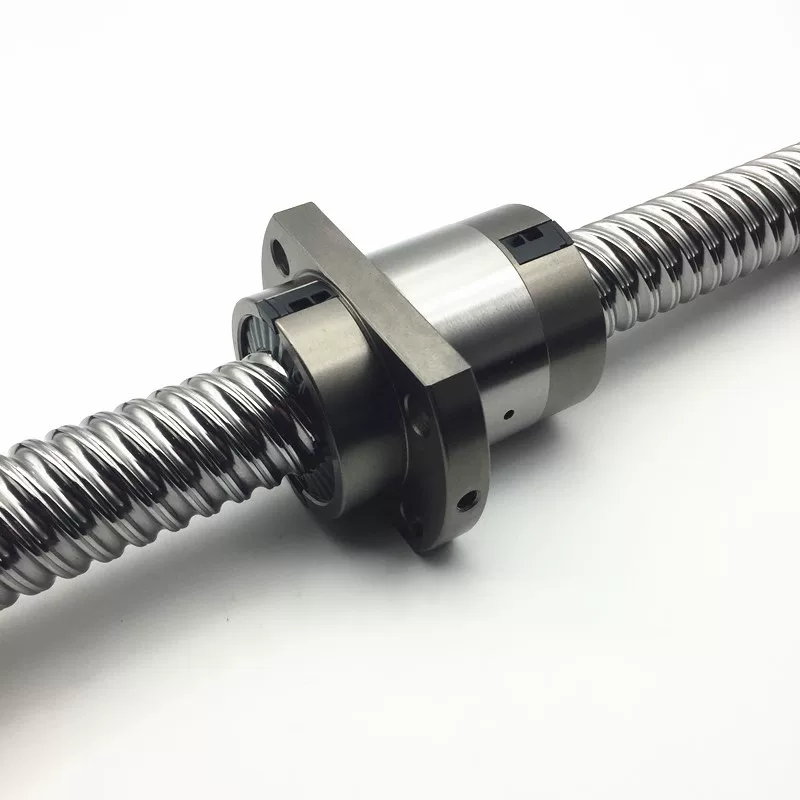
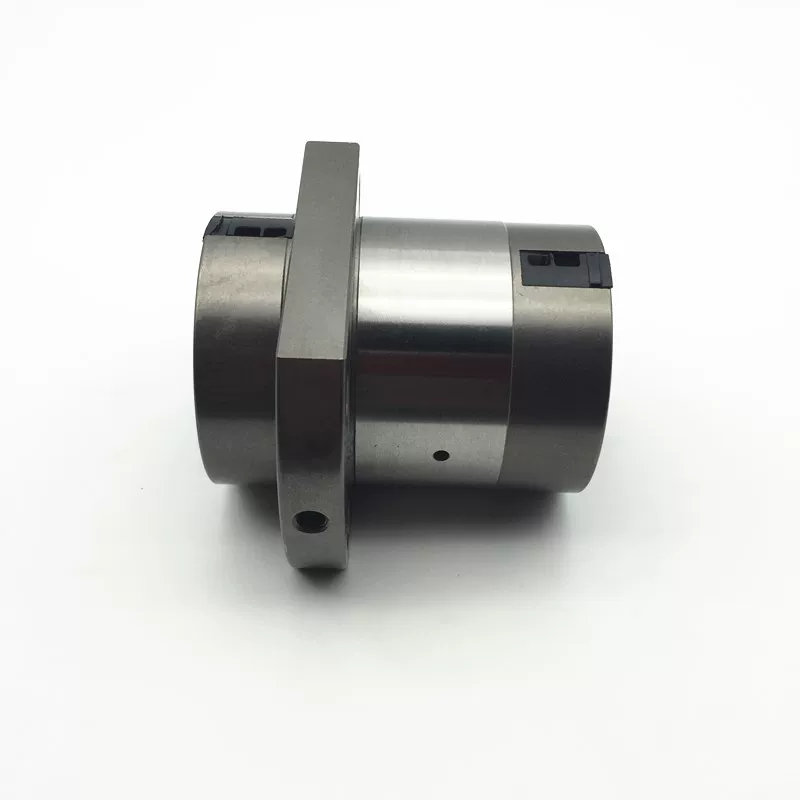
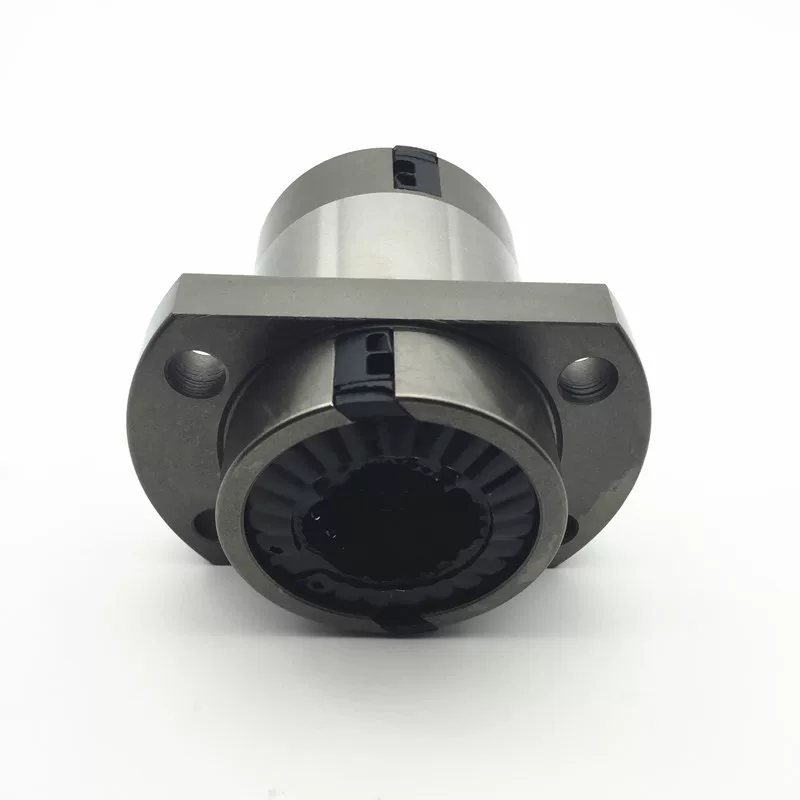
- F: Round-Flanged. Refers to the nut having a circular flange, a distinctive visual feature.
- Y: Typically represents a specific subclass within this series.
Core Value: Provides an affordable, easy-to-install, and reliable standardized ball screw solution, highly suitable for the general automation sector where cost sensitivity and high volume are key.
II. Core Structure and Design Features
-
Round Flange Nut:
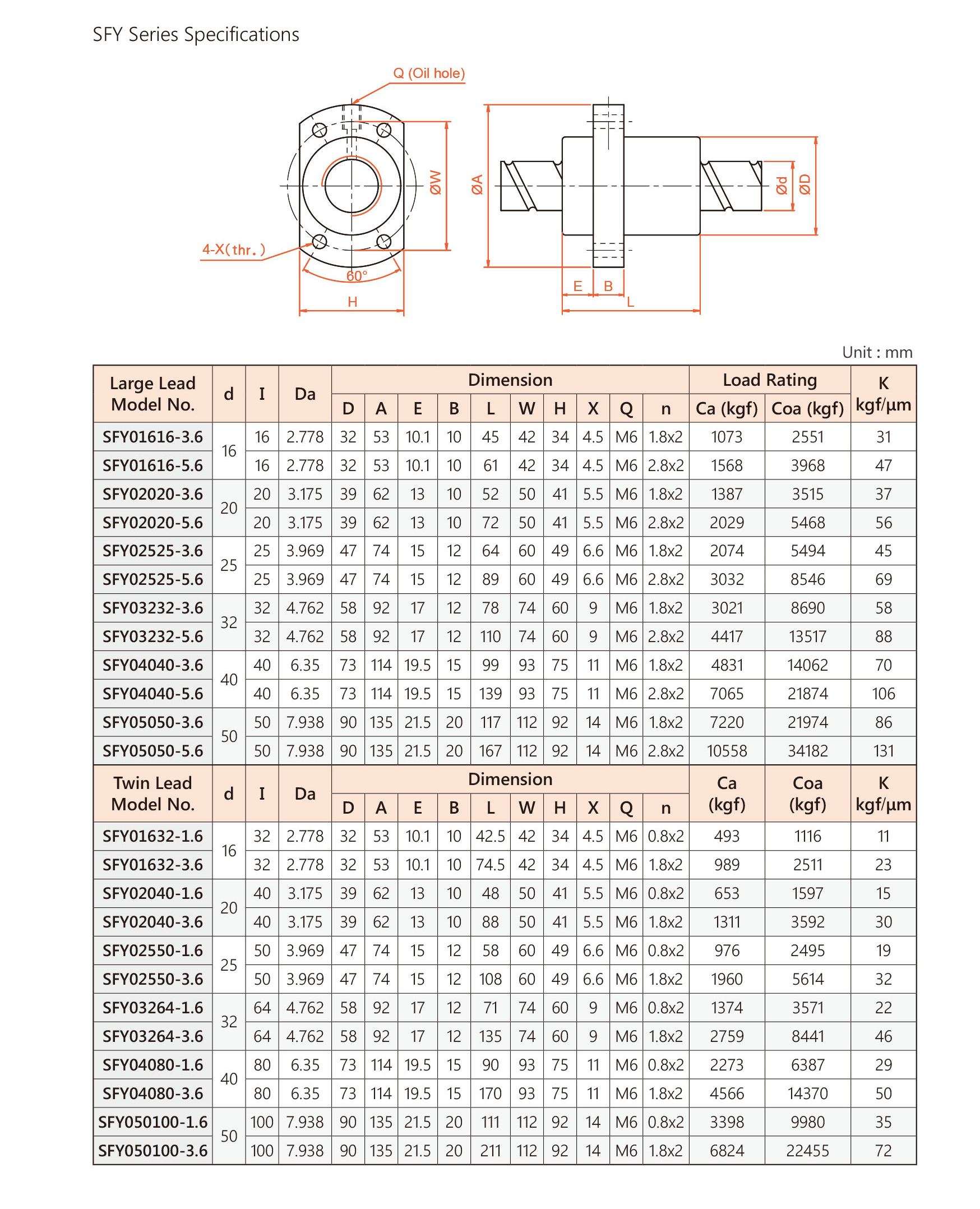
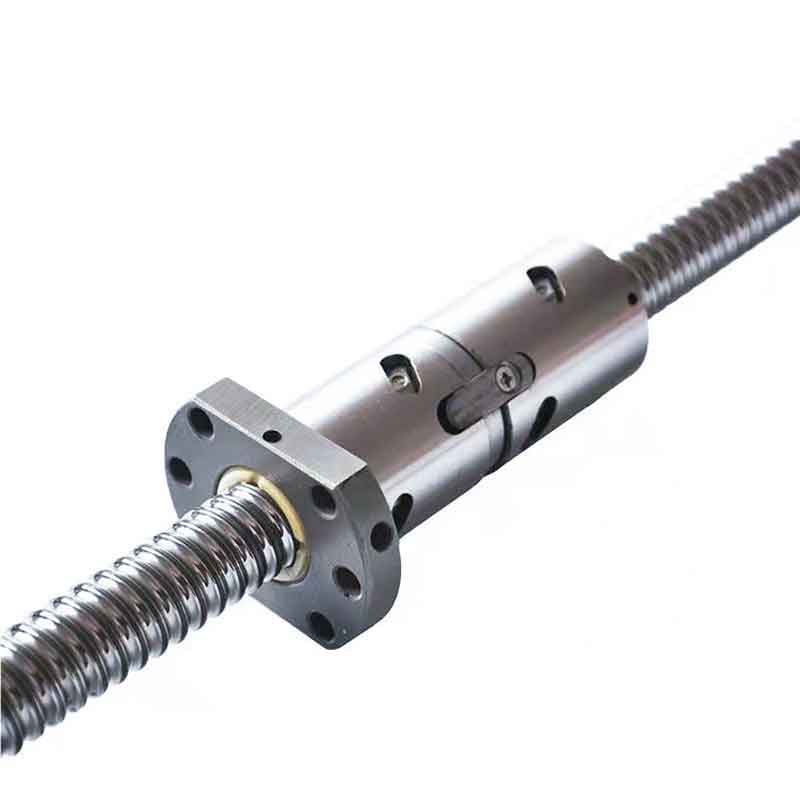
The nut features a circular flange mounted with screws distributed around its circumference. This design is more space-saving than a square flange and offers flexible installation orientation, though its resistance to torsional moments is slightly weaker. It is fully sufficient for most applications with moderate loads.
-
Integrated Support Unit:
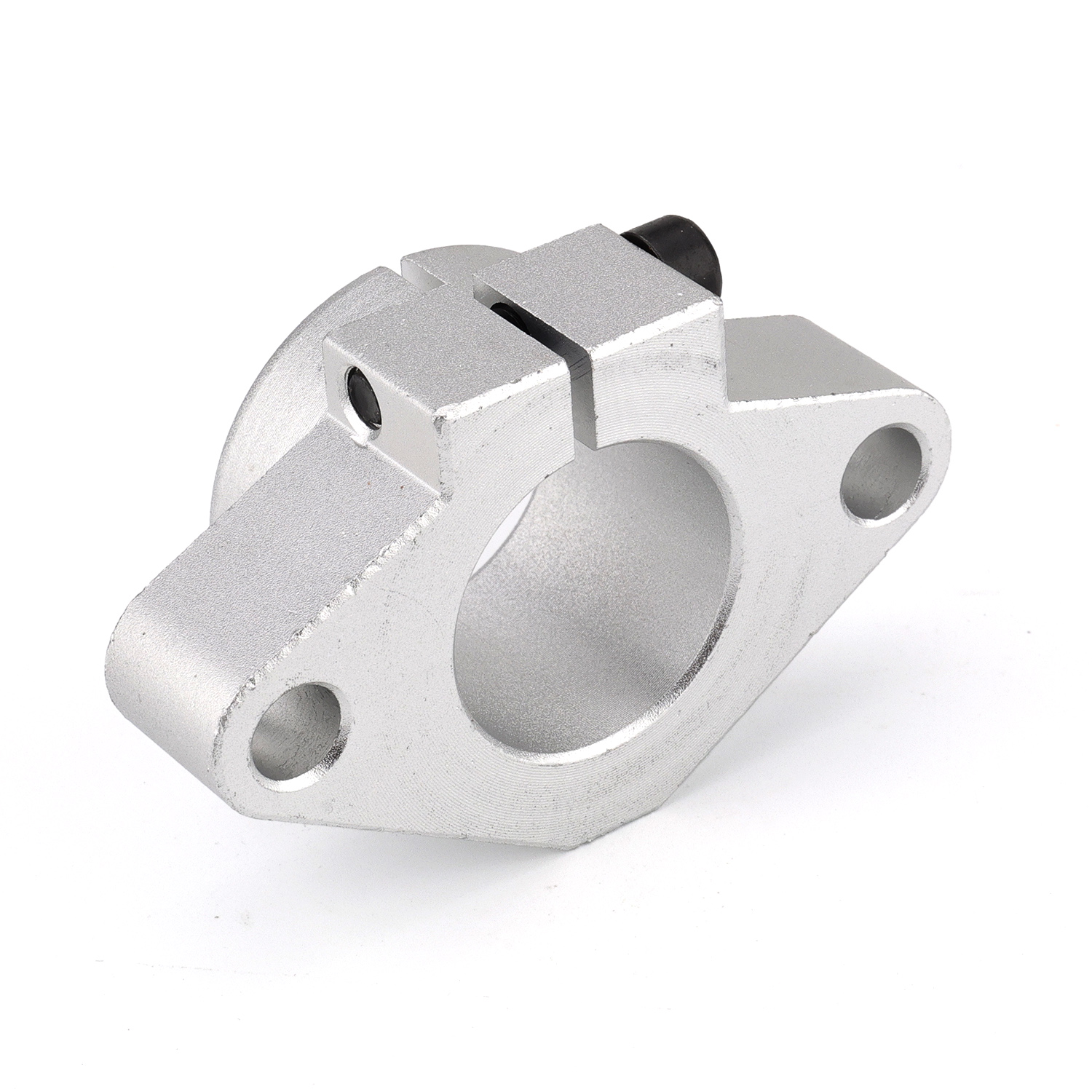
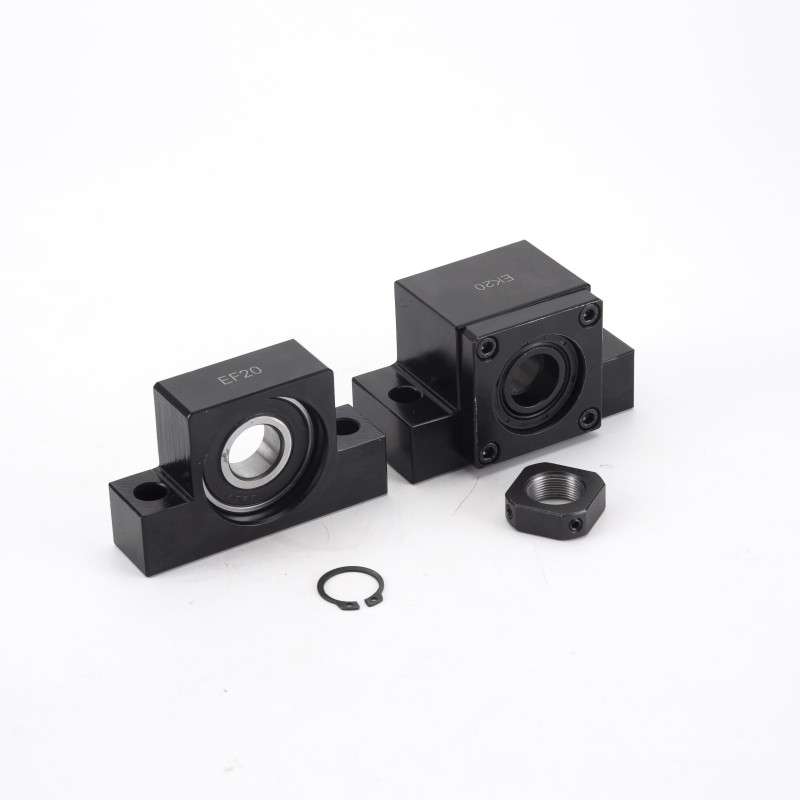
Similar to SFU, SFY typically comes with matching support bearing housings. The fixed end uses angular contact ball bearings to withstand bidirectional axial loads; the support end uses deep groove ball bearings, primarily to support radial loads and allow slight axial float. The support unit has a compact structure, is pre-lubricated and sealed, enabling "ready-to-install" use.
-
Standard Accuracy and Preload:
The screw lead accuracy is typically C7 (standard grade) or C5 (precision grade), meeting the positioning requirements of the vast majority of automation equipment. The nut typically features standard preload (or light preload), ensuring relatively low friction and good rigidity while controlling cost and temperature rise.
-
Economical Design:
Optimized in terms of materials, heat treatment, and manufacturing processes to minimize production cost while ensuring reliability and basic performance.
III. Core Performance and Advantages
-
Excellent Cost-Effectiveness:
This is the SFY series' most core competitive advantage. It offers users an entry-level price point for a ball screw system, enabling more equipment to adopt high-performance ball screw transmission.
-
Flexible Installation and Space Saving:
The round flange nut allows for more flexible mounting hole arrangements, especially suitable for installation in confined spaces. The complete support unit design simplifies assembly, reducing on-site machining and adjustment time.
-
Reliable Performance:
Despite being economical, it retains the core advantages of ball screws: high efficiency (90%), high speed capability, and long service life, significantly outperforming trapezoidal (acme) screws and plain sliding mechanisms.
-
Good Versatility and Availability:
As a standard series, it typically has ample stock, short lead times, and easy replacement, making it very suitable for the batch production of standard machine models.
IV. Comparison with Other Series (e.g., SFU)
| Feature |
SFY (Economical Round Flange) |
SFU (Standard Square Flange) |
DFU (Double-Nut High Precision) |
| Nut Flange |
Round flange, flexible installation, moderate torsion resistance. |
Square flange, stable installation, strong torsion resistance. |
Square or large flange, highest rigidity. |
| Core Positioning |
Economy, cost-first, meets general performance requirements. |
Balance of performance and cost, mainstay for industrial applications. |
High performance, zero backlash, high rigidity, cost-secondary. |
| Accuracy Grade |
Mainly C7, optionally C5. |
Mainly C5, optionally C7 or C3. |
| Rigidity / Preload |
Standard or light preload, rigidity meets general needs. |
Various preload options available, good rigidity. |
Double-nut preload, highest rigidity. |
| Price |
Most competitive, most economical. |
Moderate, high cost-performance ratio. |
Very expensive. |
| Typical Applications |
Light automation, packaging machinery, gantry drives, standard CNC equipment. |
Machining centers, CNC machine tools, precision automation, robotics. |
Ultra-precision machine tools, semiconductor equipment, measuring instruments. |
V. Typical Application Fields
Leveraging its excellent price-performance ratio, SFY shines in a wide range of light to medium-duty automation fields:
- General Automation Equipment: Assembly machines, packaging machines, labeling machines, feeders.
- 3D Printers (Industrial/Commercial Grade): Core X/Y/Z-axis drives; a popular choice for many high-end 3D printers.
- Laser Equipment: Motion systems for laser marking, engraving, and cutting machines.
- Medical and Laboratory Equipment: Sample handling mechanisms, door opening mechanisms.
- Stage Lighting and Audio Equipment: Lifting and sliding mechanisms.
- Small to Medium CNC Machines: Feed axes for woodworking machines, sign engravers, light-duty machining centers.
- Robotics: Drive axes for small Cartesian (gantry) robots.
VI. Selection and Usage Guidelines
- Define Requirements: Accurately assess load, speed, accuracy, and life requirements. If SFY's parameters can meet them, it is the most cost-effective choice.
- Mind Nut Anti-Torsion: The round flange may be weaker when subjected to significant torsional moments. If the application involves notable lateral forces or torque, verification is needed, or consider a square flange series (like SFU).
- Accuracy Matching: Confirm whether C7 or C5 accuracy meets the equipment's positioning and repeatability requirements.
- Lubrication and Maintenance: Even though it's economical, regular lubrication via the grease nipples on the support unit and nut as required is still necessary to ensure service life.
- Avoid Overloading: Economical designs often have tighter safety margins. Avoid prolonged overload or shock loads.
The SFY ball screw assembly is an excellent representative of the democratization and popularization of ball screw technology. It successfully combines the core advantages of high-performance ball screws (efficiency, high speed, long life) with highly competitive cost and convenient installation, making it a "mainstay" in upgrading small and medium-sized automation equipment. Choosing SFY means selecting a reliable, efficient, and modern linear transmission path for equipment under budget constraints. It is a wise choice for achieving the dual goals of performance improvement and cost control.