EN
EN
Quick Links

Clinical challenges and core demands The radiology department of the client's medical center is facing multi-dimensional challenges when upgrading digital X-ray equipment:• Low positioning efficiency: The traditional manual adjustment mode of th...
The radiology department of the client's medical center is facing multi-dimensional challenges when upgrading digital X-ray equipment:
• Low positioning efficiency: The traditional manual adjustment mode of the ball tube and the flat panel detector takes 90 seconds to switch from the chest to the lower limbs each time, which increases the workload of the technicians
• Limited geometric accuracy: The manual locking mechanism has cumulative errors, causing misalignment in the long bone splicing image and affecting the force line analysis of the entire lower limb
• Dose control challenge: A slight change in the source image distance (SID) can significantly affect the radiation dose to the patient and requires sub-millimeter level stability to be maintained
• Space utilization conflict: Emergency chest radiographs and lateral radiographs for wheelchair patients need to quickly switch between different shooting geometries, and the existing equipment lacks flexibility
• The core demand: In the compact computer room space, the fully automatic, high-precision and repeatable three-dimensional coordinated movement of the tube and flat panel detectors is achieved.
1. System architecture design
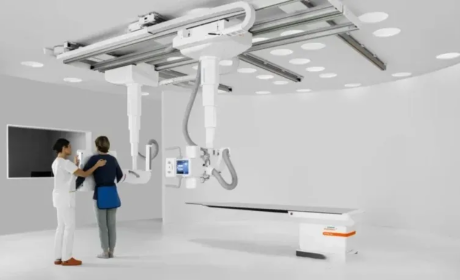
• Ceiling guide rail ring (ball tube suspension system)
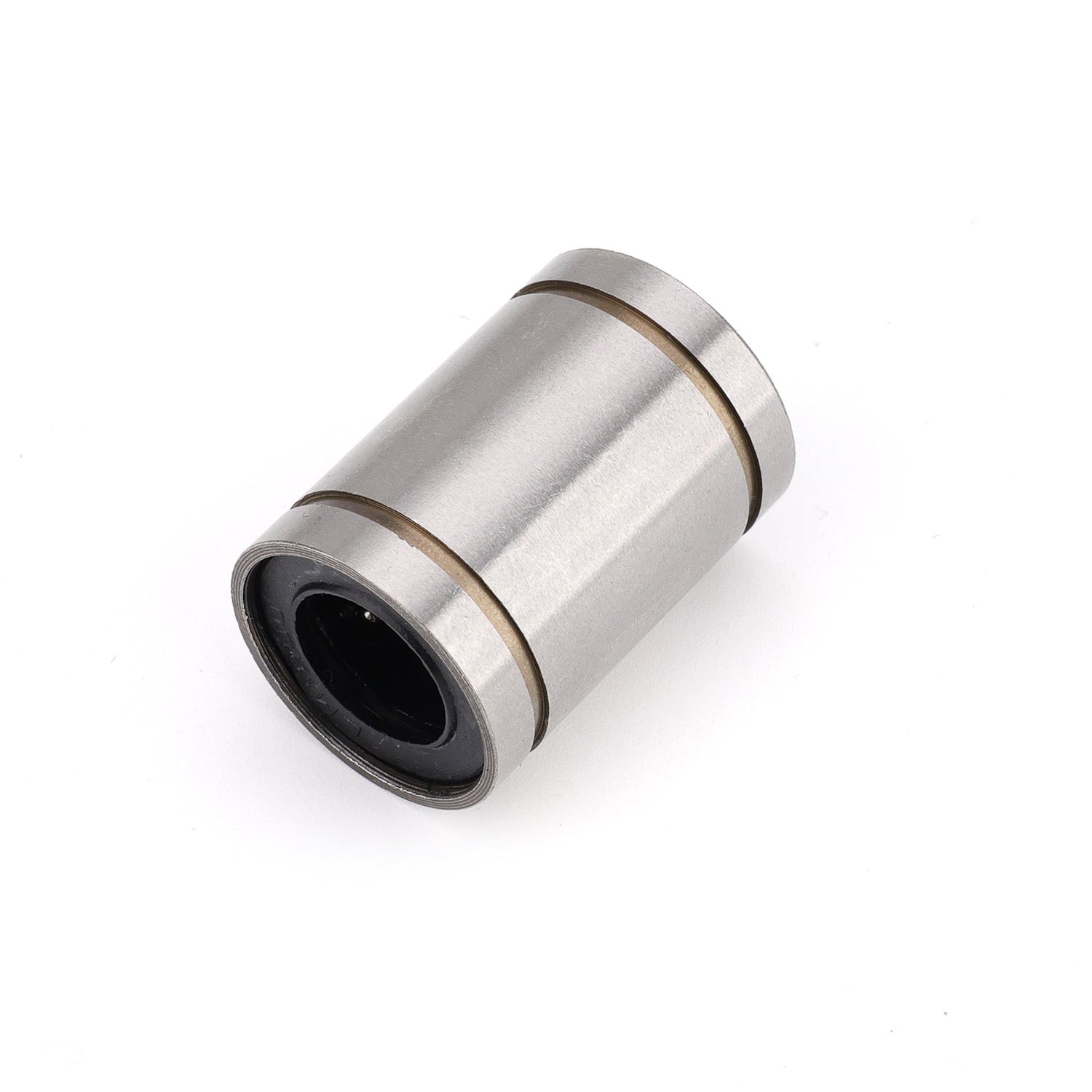
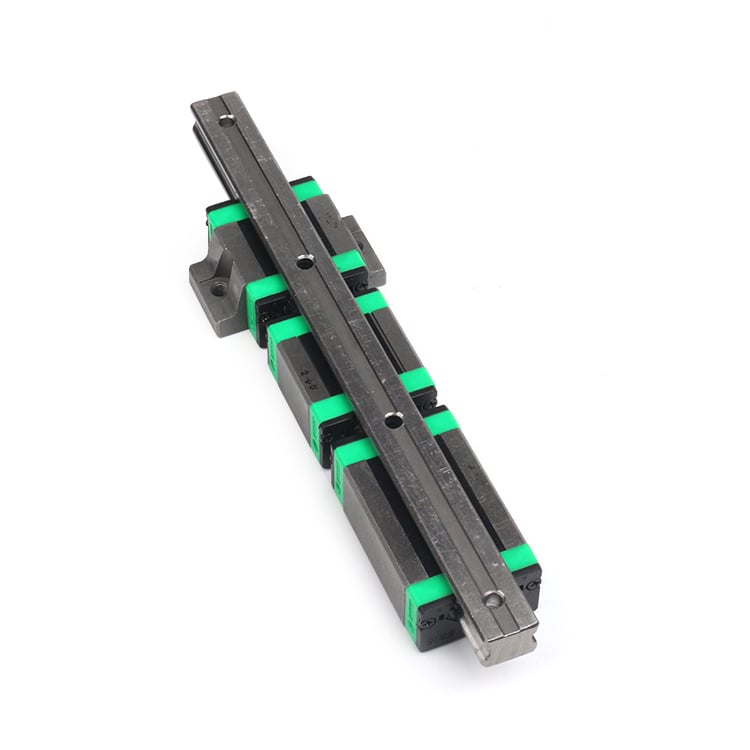
Two parallel high-rigidity linear guides are adopted to form a suspended gantry structure
The integrated servo motor drives the gear rack to achieve rapid and precise positioning of the ball tube in the horizontal plane (X/Y axis) (maximum speed 1.5m/s, repeatability accuracy ±0.1mm).
The guide rail slider is connected to the telescopic balance arm, providing the vertical (Z-axis) lifting and self-rotation of the ball tube (C-arm rotation).
• Ground embedded guide rail (flat panel detector system)
Integrated design of ground rail and lifting column: The flat panel detector can be automatically moved out/retracted in the horizontal direction and lifted vertically through the column with built-in linear guide rails
Automatic centering and pitch adjustment: The flat plate is equipped with ±5° pitch and left-right fine-tuning functions, which are achieved by micro linear guides to ensure that the detector is always perpendicular to the X-ray beam
Intelligent collaborative control
The main control system calculates the geometric relationship between the tube, detector and patient in real time, and the dual-loop system automatically moves synchronously to the preset position
With built-in laser positioning and visual recognition, after the patient's position is confirmed, the system automatically recommends and moves them to the standard irradiation position
2. Breakthroughs in key technologies
• "Zero gap" holding technology: The guide rail adopts a double slider pre-pressing design to ensure no wobbling at any hovering Angle
• Gravity compensation algorithm: In response to the unbalanced torque of the suspension system, the control system adjusts the motor torque in real time to achieve smooth start and stop
• Emergency safety redundancy: All key shafts are equipped with electromagnetic braking and mechanical backup locking, which automatically lock to the current position when power is off
3. The clinical diagnostic value has been enhanced
• Standardization of image quality: The improvement of geometric accuracy makes image anatomical measurements (such as cardiopulmonary ratios) more reliable, supporting standardized data input for AI-assisted diagnosis
• Emergency efficiency: Trauma patients can complete multi-site photography in one stop, reducing the average emergency stay time by 18 minutes
• Human resource allocation optimization: Under the same workload, the number of technicians can be reduced by one, or they can be assigned to more complex image-guided operations
• The cost of consumables has decreased: Due to the re-shooting rate dropping from 8% to below 1%, approximately 150,000 yuan is saved annually in film/printing consumables and radiation doses
• Designed for the future: The highly flexible and precise motion platform reserves physical space for subsequent intelligent functions such as AI-assisted positioning, automatic dose optimization, and multi-modal image fusion.